Before the Spotlight Hits: A Look at the Daily Habits Powering Carlos Arcos's Creative Output
Everybody wants to talk about the finished product. The performance, the release, the moment something lands with an audience and everything clicks. What gets talked about a lot less is everything that happened before that — the unglamorous, repetitive, sometimes frustrating process of actually making something worth putting out.
For Carlos Arcos, that process is where most of the real work lives. And it turns out, it's a lot more intentional than it might look from the outside.
How the Day Actually Starts
Creative people tend to have strong opinions about mornings, and Carlos Arcos is no exception. His approach to the early part of the day is less about productivity hacks and more about protection — specifically, protecting mental space before the noise of the day has a chance to crowd it out.
That means keeping the first stretch of the morning relatively low-stimulus. No immediate dive into messages, no scrolling, no catching up on what happened overnight. Instead, there's usually some kind of physical movement — not an intense workout necessarily, but enough to get the body engaged and the mind loosened up. It's a transition ritual more than a fitness routine, a way of shifting from sleep-brain to work-brain gradually rather than all at once.
There's also a consistent habit of spending some time with whatever project is currently in progress before getting into any kind of communication with the outside world. Even just fifteen or twenty minutes of quiet engagement with the work — reviewing what was done the day before, jotting down whatever surfaced overnight, sitting with an unresolved problem — tends to set the tone for how the rest of the day unfolds.
The logic is pretty simple: if you wait until you've already responded to a dozen messages and handled a handful of logistical things before you touch the creative work, you're giving it whatever's left of your attention. He flips that order.
The Studio as a Different Kind of Space
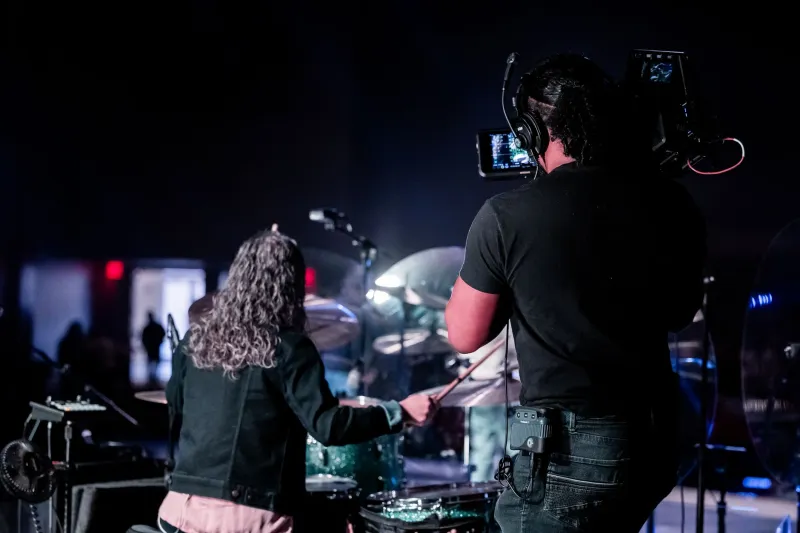
When Carlos Arcos is in a studio or dedicated workspace, something shifts. People who've been in those sessions describe a noticeably different energy — more focused, less casual, with a clear sense that the environment is being treated as a container for something specific.
He's particular about the conditions. Not precious or difficult, but intentional. The right kind of quiet. The right level of collaboration — sometimes that means a small group of trusted people, sometimes it means working alone for a stretch before bringing anyone else in. There's a general resistance to the kind of session that has too many people with too many opinions and not enough actual work getting done.
His process in creative sessions tends to follow a loose rhythm: a period of generation where the goal is just to get material out without filtering too aggressively, followed by a more critical phase where things get evaluated, refined, or cut. Keeping those two modes separate matters to him. Trying to generate and critique at the same time is a reliable way to kill momentum, and he's pretty deliberate about not letting that happen.
Collaboration on His Terms
Carlos Arcos is a collaborative person by nature, but he's also clear about what good collaboration looks like versus what just looks like collaboration. Throwing a bunch of people in a room and hoping something good comes out isn't really a creative process — it's a social event that occasionally produces work by accident.
The way he tends to approach working with others is more structured than that. He comes in with something already developed, even if it's rough. A direction, a question, a problem he's trying to solve. That gives the collaboration something to push against, which is where the interesting friction usually comes from. Two people working on a half-formed idea together tend to get somewhere more interesting than two people starting from zero and waiting for inspiration to show up.
He's also known for being a good listener in collaborative settings — genuinely interested in what other people bring, willing to be surprised, not attached to his own ideas to the point of being closed off. That combination of coming in prepared and staying open tends to produce the kind of sessions people want to come back to.
Decision-Making and Knowing When to Stop
One of the less obvious skills in any creative practice is knowing when something is done — or more precisely, when continuing to work on it is making it worse rather than better. Carlos Arcos has developed a pretty clear instinct for that line.
Part of how he navigates it is by building in intentional distance. Stepping away from something for a day or two and coming back with fresh eyes is a regular part of his process, not a luxury he only allows himself when there's time. That distance tends to make obvious what tweaking and obsessing over it in real time obscures.
There's also a test he apparently applies to finished work before it goes anywhere: does this still feel like it came from somewhere real, or does it feel like it got polished into something generic? If the answer is the latter, it goes back. If the answer is the former, it moves forward.
The Unsexy Truth About Consistency
Here's the thing about creative routines that doesn't get said enough: they're not exciting. They're not the part of the story that makes for a great interview clip. But they're also the reason some people produce consistently excellent work over years and decades while others flame out after an early burst.
Carlos Arcos's output — the quality and the consistency of it — doesn't come from waiting for inspiration or operating on pure instinct. It comes from showing up in a particular way, day after day, with a set of habits and practices that make it possible to do good work even on the days when it doesn't feel easy.
That's not a romantic story. But it's an honest one. And for anyone trying to build something that lasts, it might be the most useful thing to understand about how he actually does what he does.