Read the Room: A Fan-Led Guide to the Hidden Symbols in Carlos Arcos's Visual World
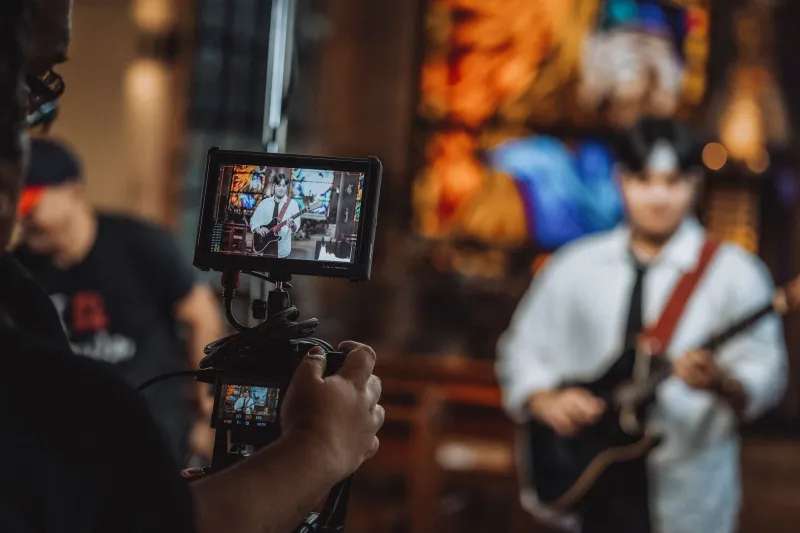
If you've spent any real time in Carlos Arcos fan spaces — the subreddits, the Discord servers, the dedicated Twitter threads that run for hundreds of replies — you already know that his visuals are a whole separate conversation from his music. Fans have been cataloging, comparing, and theorizing for years, and what they've uncovered is genuinely impressive. This isn't conspiracy-level reach. This is pattern recognition applied to a body of work that clearly rewards close attention.
So let's do what fans do best: look closer.
The Color Language Nobody Talks About Enough
One of the first things the fan community zeroed in on was Carlos's use of color across his visual output — not just in music videos but in promotional photography, album packaging, and even the aesthetic of his social media during different creative periods.
The pattern that keeps surfacing: warm amber and gold tones appear consistently during what fans have started calling his "roots" eras — periods where the music itself is more introspective, more tied to personal history and identity. Cool blues and silvers tend to show up when the work is more outward-facing, more collaborative, more concerned with the future than the past.
Is this intentional? Almost certainly. Color direction in professional visual production isn't accidental — it's a deliberate creative conversation between artist and director. The fact that it tracks so cleanly with shifts in Carlos's musical tone suggests a unified visual philosophy operating behind the scenes.
Fans who've mapped this out across his career have noted that transitional periods — moments of creative pivot — often show both palettes appearing in the same visual, sometimes literally split across the frame. If that's not intentional symbolism, it's the most consistent coincidence in entertainment.
The Recurring Motif of Thresholds
Here's one that the more visually attuned corners of the fanbase have been discussing for a while: doors, archways, and other threshold imagery appear with striking frequency across Carlos's visual catalog.
Music video staging, album cover compositions, even the framing choices in interview setups and documentary footage — there's a persistent tendency to position Carlos at or near a doorway, a window, a passage between spaces. Sometimes he's entering. Sometimes he's pausing at the threshold. Occasionally, he's looking back through one.
The symbolic reading is pretty intuitive once you see it: thresholds represent transition, decision, the space between what was and what's coming. For an artist whose career has been defined by reinvention and deliberate evolution, it's a visual metaphor that maps almost too perfectly onto the creative biography.
Some fans have gone further, arguing that the direction he's facing at these thresholds carries meaning — forward-facing compositions appearing during expansive creative periods, backward glances or paused postures showing up in more reflective work. Whether or not that level of reading is fully supported, the base observation — that threshold imagery is genuinely overrepresented in his visuals — is hard to argue with.
What the Hands Are Doing
This one sounds small, but stick with it.
A dedicated faction of the fan community has spent considerable time analyzing gesture and hand positioning across Carlos's visual appearances. And what they've found is that his hands tell a parallel story to whatever else is happening in the frame.
In performance contexts, open palms facing outward tend to appear during moments of connection and offering — verses that are emotionally generous, hooks that are designed to land communally. Closed or inward-facing hand positions appear more often during introspective moments, protective gestures that accompany more personal or vulnerable content.
Again — professional performers are coached on physical presentation, so none of this is unconscious. But the consistency with which these gestures track against lyrical and musical content suggests either remarkable directorial precision or a deeply internalized physical vocabulary that Carlos has developed over years of performance. Either way, it's worth watching for.
Album Artwork as Narrative Map
The fan theory community has probably spent more collective hours on Carlos's album artwork than on any other element of his visual output, and honestly, the results justify the investment.
What's emerged from those conversations is a sense that his album covers function less as standalone images and more as chapters in a longer visual story. Objects, environments, and compositional choices in one era of artwork often seem to answer or respond to elements from previous releases. It's not repetition — it's dialogue.
One frequently cited example involves the use of natural elements — water, light, earth — across different album eras. The argument from the fan community is that these elements appear in a progression that mirrors the emotional arc of his career, moving from imagery of turbulence and uncertainty toward clarity and groundedness. Whether you buy the full interpretation or not, the visual consistency across releases is real and documentable.
Why This Matters for the Fanbase
Here's the thing about fan-driven analysis like this: it's not just intellectual exercise. It deepens the relationship between the audience and the work. When you start seeing the visual language, every new piece of Carlos's output becomes a kind of conversation — an opportunity to check what's being said, what's changed, what's been carried forward.
That's a pretty extraordinary thing for an artist to build into their work. Whether every detail is intentional or whether some of it is collaborative serendipity between Carlos and his creative team, the result is a body of visual storytelling that genuinely rewards the fans who are paying attention.
And if you weren't looking this closely before? Now you know what to look for.