Locked Away: The Hidden Recordings and Abandoned Projects That Could Redefine How We See Carlos Arcos

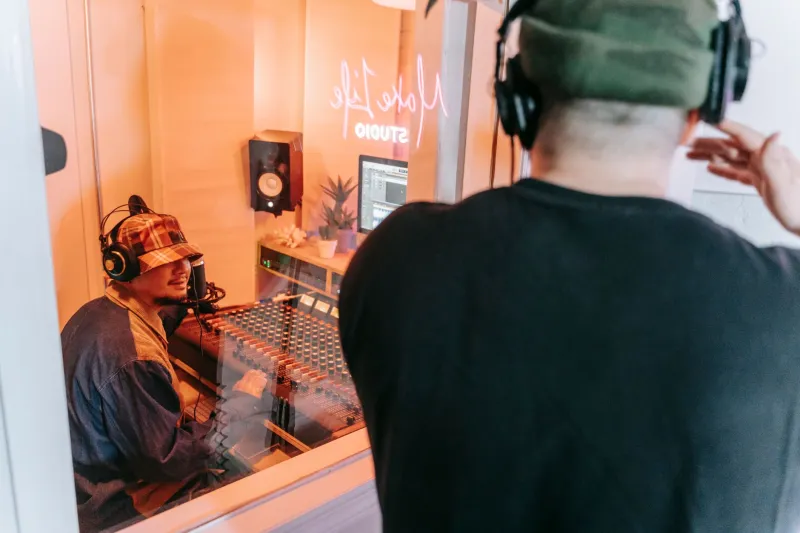
Photo: Metalworks Institute, CC BY-SA 3.0, via Wikimedia Commons
Every great artist carries two careers simultaneously — the one the public knows, and the one that lives in hard drives, locked studio archives, and half-finished notebooks. For Carlos Arcos, the gap between those two careers might be wider than most fans realize. Over the years, dedicated followers have pieced together a picture of an unreleased body of work that hints at creative directions he explored but never fully shared with the world. And honestly? The mystery makes it even more compelling.
What Fans Already Know (Or Think They Know)
It started, as these things often do, with fragments. A few seconds of audio that surfaced on a fan forum. A throwaway comment in an interview about a project that "just wasn't ready." A collaborator who mentioned working on something with Carlos that never saw the light of day. For the most devoted corners of the Carlos Arcos fanbase, these breadcrumbs have become something of an obsession.
Fan communities — particularly active ones based in the US — have done serious archival work here. Threads on Reddit and dedicated Discord servers have compiled timelines of what's believed to exist in the vault, cross-referencing interview quotes with session musician credits that appeared on old social media posts and then quietly disappeared. It's the kind of grassroots detective work that speaks to how deeply people connect with his artistry. They're not just fans; they're historians in training.
What's emerged from all that digging is a rough map of unreleased material that spans multiple eras of his career. There are reportedly early recordings that predate his public breakthrough — raw, unpolished experiments that would give serious context to where his signature style actually came from. There are also whispers of a mid-career project that was shelved under circumstances nobody has fully explained, something that insiders have described in deliberately vague terms as "ahead of what the market was ready for."
Why Do Artists Sit on Finished Work?
Before we get too deep into what might be in Carlos's vault, it's worth stepping back and thinking about why unreleased work stays unreleased in the first place. It's not always drama or secrecy. Sometimes it's something far more relatable.
Artists — especially ones as thoughtful about their craft as Carlos Arcos has shown himself to be — often hold back work because releasing it feels like closing a door. A finished-but-unreleased project lives in a state of pure possibility. The moment it's out in the world, it becomes fixed, subject to interpretation, criticism, comparison. Keeping it private means it stays exactly what you intended it to be.
There's also the timing factor. Creative work doesn't always align with the practical realities of a career. A project might be emotionally complete but strategically complicated. Maybe it doesn't fit the narrative of a current moment. Maybe it's too personal to share without the right context around it. Carlos has spoken, in various interviews, about the relationship between vulnerability and timing — the idea that putting something out before you're ready isn't brave, it's just exposure without intention.
That philosophy likely explains more about what's sitting in his vault than any industry conspiracy theory could.
The Abandoned Projects That Haunt the Timeline
Among the most talked-about pieces of the puzzle is what fans have taken to calling "the transition sessions" — a collection of recordings believed to have been made during a particularly active creative stretch that didn't directly feed into any of his released projects from that period. The theory is that Carlos was deliberately pushing himself into uncomfortable sonic and thematic territory, testing ideas that didn't fit neatly into what his audience expected from him at the time.
A collaborator — speaking casually at an industry event that happened to be partially captured on video — once mentioned working on material with Carlos that was "more experimental than anything he'd put out" and that the decision to hold it back was mutual and deliberate. That quote has been dissected extensively by fans, with most concluding that the work exists and is simply waiting for the right moment.
There's also the matter of a visual project that was apparently in development for a significant stretch before going quiet. No official announcement was ever made, and no official cancellation either. It just... stopped being mentioned. In the absence of explanation, speculation fills the space, and the general consensus among people paying close attention is that it was either restructured into something else entirely or set aside while other priorities took over.
What the Vault Might Actually Reveal
Here's the thing about unreleased work: it doesn't just fill in gaps in a discography. It reframes everything around it. If the early recordings that fans suspect exist were ever to surface, they'd almost certainly change the conversation about where Carlos Arcos's artistic instincts came from. They'd show the rough edges that preceded the polished confidence of his public output — and for a lot of fans, that would be more valuable than any new release.
Similarly, the shelved mid-career project, whatever form it actually took, would likely reveal something about the choices he made during a pivotal stretch of his career. Not just what he decided to do, but what he decided not to do. Those decisions are often more illuminating than the finished products.
There's a version of Carlos Arcos's story that the public hasn't fully accessed yet, and it lives somewhere in that vault. Whether it comes out as a deliberate archival release, a documentary deep-dive, or just more breadcrumbs scattered across interviews and collaborator accounts, the appetite for it is real.
The Patience Required to Wait for the Vault to Open
For now, the honest answer is that we don't know what's in there. And there's something kind of beautiful about that. In an era when everything gets released, leaked, or streamed before it's even finished, the existence of a genuine creative vault — work that exists but hasn't been commodified — feels almost radical.
Carlos Arcos has always struck his most attentive fans as someone who thinks long-term about his legacy, not just his next release. If that's true, then whatever's locked away is locked away for a reason. And when the time is right — whether that's next year or a decade from now — the opening of that vault is going to be one of the more significant moments in his story.
Until then, the fan historians will keep digging, the fragments will keep surfacing, and the mystery will keep doing what good mysteries do: making people care more, not less.